
AI-powered recruitment has become an important area of strategic transformation, enabling organizations to manage candidate evaluation processes more quickly, consistently, and in a data-driven manner. Particularly for positions that receive a high volume of applications, require technical competencies, or are critical to the organization, relying solely on resumes, interview impressions, or intuition may no longer be sufficient.
A resume is an important starting point, but it cannot fully reveal a candidate’s potential, motivation, or fit for a role on its own. Interview impressions are also valuable; however, when they are not supported by structured assessment, the decision-making process can become overly open to personal interpretations. This gap is one of the main reasons why many organizations are turning to solutions today.
Meritex.ai, Astera’s solution that integrates the AI-powered recruitment approach into recruitment processes, is an AI-powered recruitment decision support system that helps evaluate candidate-role fit in a more structured and data-driven manner. Meritex.ai analyzes the requirements of an open position, candidate profiles, key competencies, and experience details to provide consultants with a scientifically grounded second opinion. In Astera’s approach, Meritex.ai is positioned not as a decision-maker, but as a support layer that complements human expertise.

Why Has Strategic Decision-Making in Recruitment Become More Difficult?
Today’s recruitment processes require HR teams to manage many variables simultaneously. Position expectations are changing rapidly, while learning agility, motivation, team fit, and alignment with organizational culture are becoming increasingly important alongside technical competencies. This complexity is transforming strategic recruitment decisions from simply a “resume screening” task into a multidimensional analysis process. For this reason, many organizations are beginning to integrate AI-powered recruitment approaches into their processes to make more consistent and objective assessments. Within this structure, recruitment decisions have three fundamental needs:
- Consistency: Ensuring that candidates can be evaluated according to the same criteria.
- Visibility: Making it clear which data and evaluation criteria the decision is based on.
- Speed: Ensuring that the process progresses without disrupting the candidate experience or the needs of the business unit.
When these three needs are not met simultaneously, the resulting picture is often similar: some candidates may stand out based on subjective impressions, while objectively more suitable profiles may be overlooked; evaluation criteria may vary from one interview to another; and as the process becomes prolonged, both candidate experience and business-unit satisfaction may be negatively affected. AI-powered recruitment solutions help reduce these risks by enabling candidates to be evaluated according to common criteria and making decision-making processes more transparent.
Therefore, the real need in strategic recruitment is not to eliminate human intuition, but to strengthen it with a data-supported and comparable evaluation structure. This is precisely where decision support systems adopting an AI-powered recruitment approach stand out as an important technology layer that complements human expertise.
What Is Meritex.ai and How Does It Work?
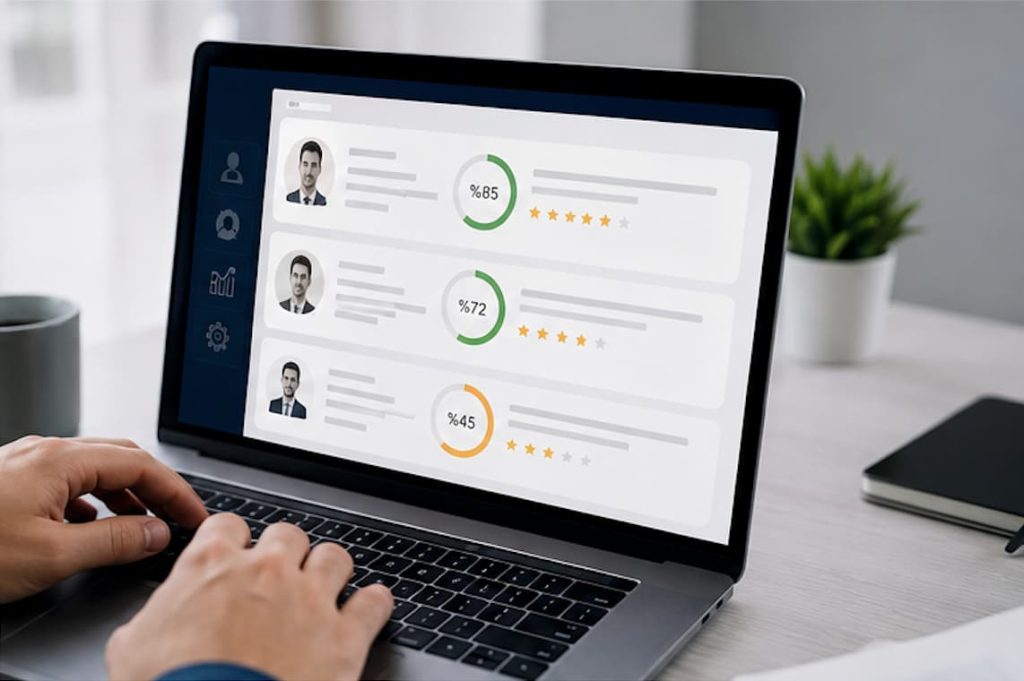
Meritex.ai does not evaluate candidates solely based on resume information within AI-powered recruitment processes. The competency set required by the position, the candidate’s professional background, career trajectory, and potential fit with the role are evaluated together. The Astera website also states that Meritex.ai analyzes the fit between candidates and positions and provides consultants with data-driven insights.
The system’s working logic can be summarized as follows: first, the requirements of the open position – technical skills, level of experience, industry knowledge, and managerial expectations – are organized within a structured framework. Candidate profiles are then compared against this framework and analyzed based on areas such as competency match, experience fit, and career trajectory. This approach contributes to conducting assessments in AI-powered recruitment processes in a more systematic and comparable manner.
At the final stage, this analysis is presented to the consultant not as a raw score, but as a reasoned second opinion. This is the most critical distinction of the Meritex.ai recruitment process: the system does not function as an “automated screening tool”; instead, it generates an additional data layer that supports the consultant’s own assessment. In this way, the AI-powered recruitment approach serves as a reliable support mechanism that improves decision quality rather than replacing human expertise.
How Does Meritex.ai Make a Difference in the Recruitment Process?
One of the most important advantages of the AI-powered recruitment approach is not only accelerating recruitment decisions, but also making them more consistent and data-driven. Meritex.ai supports consultants’ decisions at different stages of the recruitment process and helps structure candidate assessments around common criteria. This approach is particularly valuable for positions with high application volumes, where it helps maintain evaluation quality while making decision-making processes more transparent and justifiable. This approach provides several key contributions to the recruitment process:
Provides role clarity: Successful recruitment begins with an accurate role definition before searching for the right candidate. Meritex.ai supports a more structured definition of the position’s success criteria and expected competencies. When the role is not clearly defined, even the most qualified consultant may have to rely on subjective criteria. Meritex.ai helps reduce this risk.
Compares candidates using common criteria: When candidates are assessed according to the same evaluation criteria, shortlist and final decision-making processes can proceed more consistently. This is particularly important for maintaining evaluation quality in positions with a large number of applicants. AI-powered recruitment solutions enable candidates to be compared more systematically within the same evaluation framework.
Makes decisions more defensible: It becomes possible to provide a more visible and justifiable answer to the question, “Why was this candidate preferred?” This transparency is an important factor in increasing trust in communication with both internal stakeholders and candidates.
Accelerates the process: Manual workload can be reduced in candidate prioritization, competency matching, and evaluation processes. However, this speed does not replace human assessment; rather, it contributes to it by strengthening expert judgment and helping AI-powered recruitment processes be managed more efficiently.
Astera’s AI-powered recruitment approach also positions artificial intelligence not as a decision-maker, but as an enabler that supports HR teams in making more consistent and justifiable decisions.
In Which Positions and Industries Does It Create the Most Value?
The benefits provided by AI-powered recruitment solutions may not be felt to the same extent in every position. However, in roles involving high application volumes, complex competency requirements, or critical decision-making processes, these systems can offer significant advantages to recruitment teams. The situations in which their contribution is most evident can generally be summarized as follows:
- High-volume recruitment positions, because the manual comparison workload is greatest in these cases.
- Roles requiring technical expertise, because objectively supporting competency-role matching is critically important.
- Critical and senior-level positions, because the cost of a wrong hire is significantly higher in these roles.
- Fast-growing organizations, because process standardization becomes a determining factor during scaling.
In such positions, a decision support layer such as Meritex.ai helps consultants combine their existing experience with data, enabling them to create more accurate and faster shortlists. Through the AI-powered recruitment approach, candidates can be evaluated according to common criteria, decision-making processes become more consistent, and recruitment teams can dedicate more of their time to strategic assessments.
For example, a software developer position at a technology company may receive dozens or even hundreds of applications. As it takes more time to review each application with the same level of depth, according to the same criteria, and with the same consistency, fluctuations in evaluation quality may occur. AI-powered candidate assessment can provide consultants with an initial mapping at this point, enabling them to focus earlier and more deeply on candidates with the highest potential for fit.
The situation is somewhat different for senior and executive positions. The number of candidates is generally lower, but the impact of each decision on the organization is much greater. In such positions, Meritex.ai’s contribution is less about increasing speed and more about clarifying the rationale behind the decision and making subtle differences between candidates more visible.
What Sets Meritex.ai Apart from Other Recruitment Tools?
There are many HR technologies and automation tools available on the market, but most either operate solely through resume screening and keyword matching or focus on producing fully automated “yes/no” decisions. Among these solutions developed in the field of AI-powered recruitment, the key factor that differentiates Meritex.ai is that the system is designed as a decision support system; in other words, its purpose is not to eliminate candidates but to provide consultants with a richer and more data-driven perspective.
The practical meaning of this difference is as follows: Meritex.ai does not automatically remove a candidate from the list by labeling them “not suitable.” Instead, it analyzes the fit between the position and the candidate from multiple dimensions and presents this analysis to the consultant for interpretation. Thus, the final decision always remains with the human expert, while the system strengthens the basis for that decision. This approach combines human experience with data analysis in AI-powered recruitment processes, contributing to more reliable and consistent assessments.
Not Faster Recruitment, but Better Recruitment
Speed is important in recruitment, but it is not sufficient on its own. The real value for organizations lies in reaching the right candidate in less time, evaluating candidates more consistently, and placing the decision-making process on a stronger foundation.
Meritex.ai brings together human expertise and data-driven analysis at this point. Consultants are responsible for evaluating organizational culture, the context of the position, team dynamics, and candidate motivation in a holistic manner. Meritex.ai adds an analytical support layer to this process, strengthening recruitment decision quality.
Astera’s human resources services also position a technology-driven candidate database, recruitment and placement expertise, and AI-powered HR solutions together. This approach does not treat recruitment as merely an operational process. Instead, it addresses recruitment as part of organizations’ growth, transformation, and talent strategies. In this way, AI-powered recruitment practices not only help organizations increase recruitment efficiency but also support the development of more accurate and sustainable talent acquisition strategies.
What Should Organizations Consider When Evaluating These Types of Systems?
As the number of AI-powered recruitment solutions continues to grow, selecting the right technology has also become a strategic decision for organizations. Since not every AI-based system follows the same approach, organizations need to consider not only the automation features offered, but also the evaluation methodology, transparency, and the way the system supports human expertise. Therefore, organizations evaluating AI-powered recruitment solutions should consider several critical factors:
- Transparency: It should be understandable how the system reaches a conclusion; a “black box” mechanism does not create trust.
- Human oversight: The final decision should always be evaluated and approved by an expert.
- Data quality: Regardless of how sophisticated the analysis is, the accuracy of the input data (job description, candidate information) directly affects the outcome.
- Process integration: How seamlessly the tool integrates into the existing recruitment workflow determines the speed of adoption.
The way Meritex.ai is positioned – as a support layer rather than a decision-maker – naturally addresses many of these criteria. Since the system is designed to strengthen rather than disable human expertise, it enables technology to be positioned as a tool that complements human experience in AI-powered recruitment processes and contributes to more reliable, consistent, and data-driven recruitment decisions.
Astera’s AI-Powered Recruitment Approach
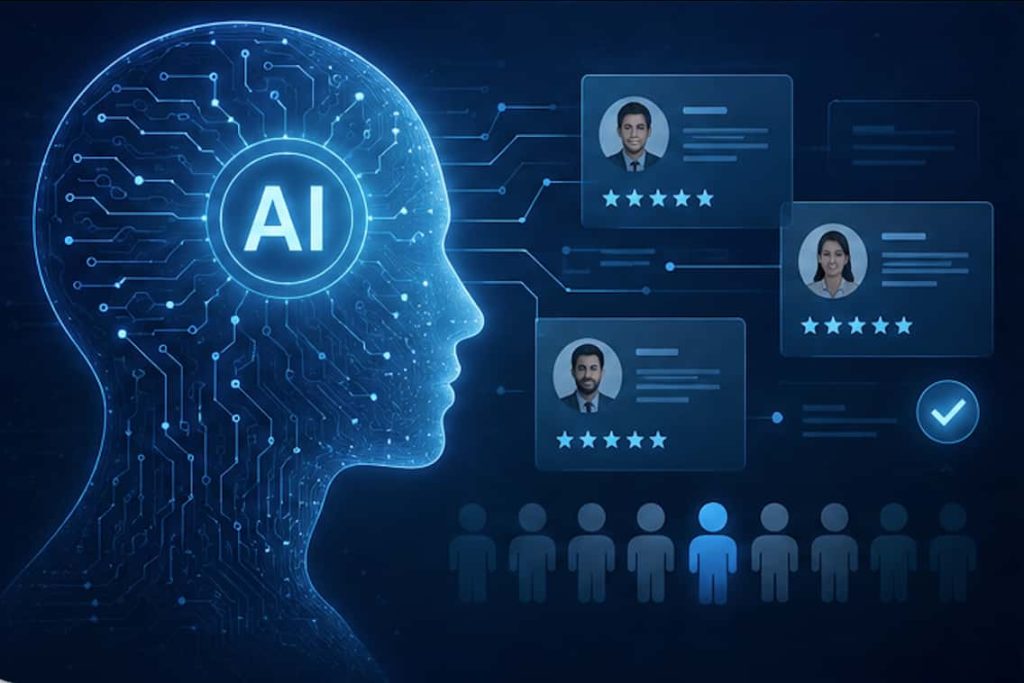
Astera approaches recruitment not simply as an operational process of filling open positions, but as a strategic talent acquisition approach that supports the sustainable growth of organizations. In this direction, it combines AI-powered recruitment processes with an experienced consulting approach to support organizations in making more consistent, data-driven, and long-term recruitment decisions. A strong candidate database, industry expertise, an experienced team of consultants, and Meritex.ai-supported assessment processes form the complementary core components of this approach.
Through this holistic structure, Astera focuses not only on identifying candidates who are suitable for open positions, but also on considering the alignment between organizational culture, position requirements, and long-term talent strategies. By bringing data-driven analysis and human expertise together under one framework, this model helps organizations meet their current recruitment needs while also reaching the right talent with greater confidence to support their future growth objectives.
Conclusion
In conclusion, the key difference of Meritex.ai lies not in fully automating recruitment processes, but in supporting human expertise with data-driven analysis to contribute to more consistent and justifiable decisions. The AI-powered recruitment approach has become not only an operational convenience but also an important competitive advantage that strengthens strategic talent acquisition for today’s organizations.
In today’s business world, organizations need to make both fast and accurate recruitment decisions. Achieving these goals is possible by using technology in a way that complements rather than replaces human experience. Meritex.ai contributes to making decision-making processes more transparent, comparable, and reliable by providing analytical insights that support consultants’ expertise.
In the long term, organizations adopting an AI-powered recruitment approach can do more than simply manage recruitment processes more efficiently. They can also build a recruitment culture that learns from each new assessment, strengthens organizational knowledge, and continuously improves. This makes it easier to reach the right talent while helping develop stronger human resources strategies that support sustainable growth.
To evaluate how Meritex.ai can create value in your organization’s recruitment processes and how it can be integrated into your organization, you can contact us.
Frequently Asked Questions
Does Meritex.ai automatically eliminate candidates?
No. Meritex.ai is a decision support system, and the final decision is always made by the consultant. The system provides the consultant with a data-supported second opinion.
What data does Meritex.ai analyze?
The main areas of analysis include position requirements, candidate profiles, key competencies, and experience details.
Is it also meaningful for small-scale organizations?
Its contribution may be more limited for positions that do not receive a high volume of applications; however, it can provide evaluation consistency for technical or critical roles regardless of organizational size.
Is AI in human resources taking people’s jobs away?
In Astera’s approach, artificial intelligence does not replace HR professionals. Instead, it is positioned as an enabler that makes their decisions more transparent, consistent, and defensible.